
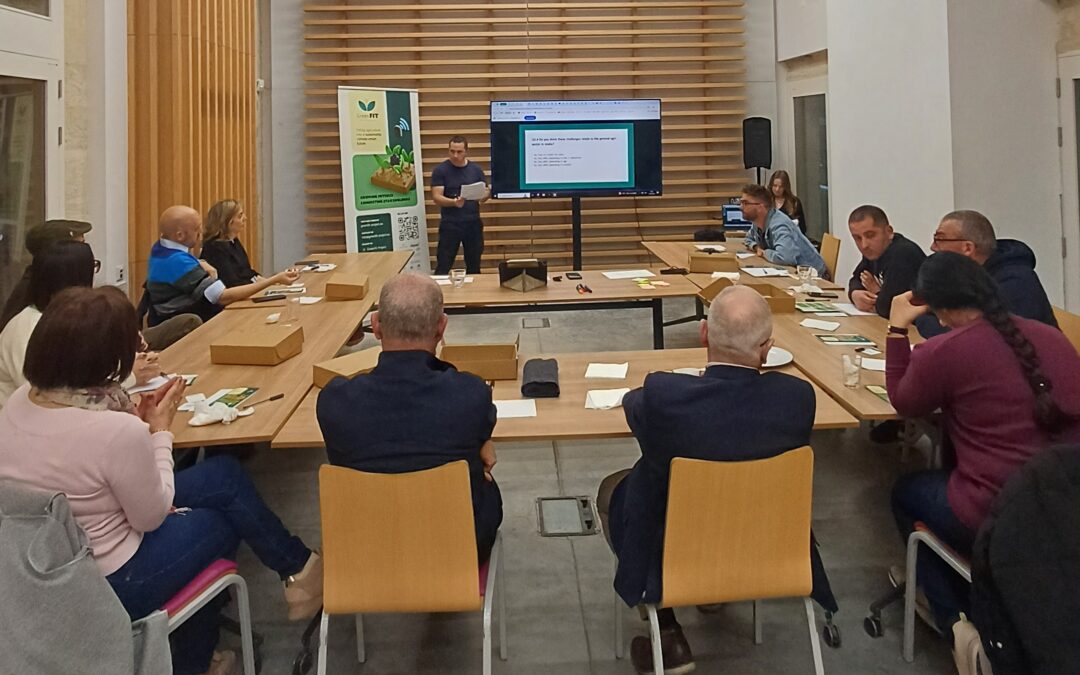
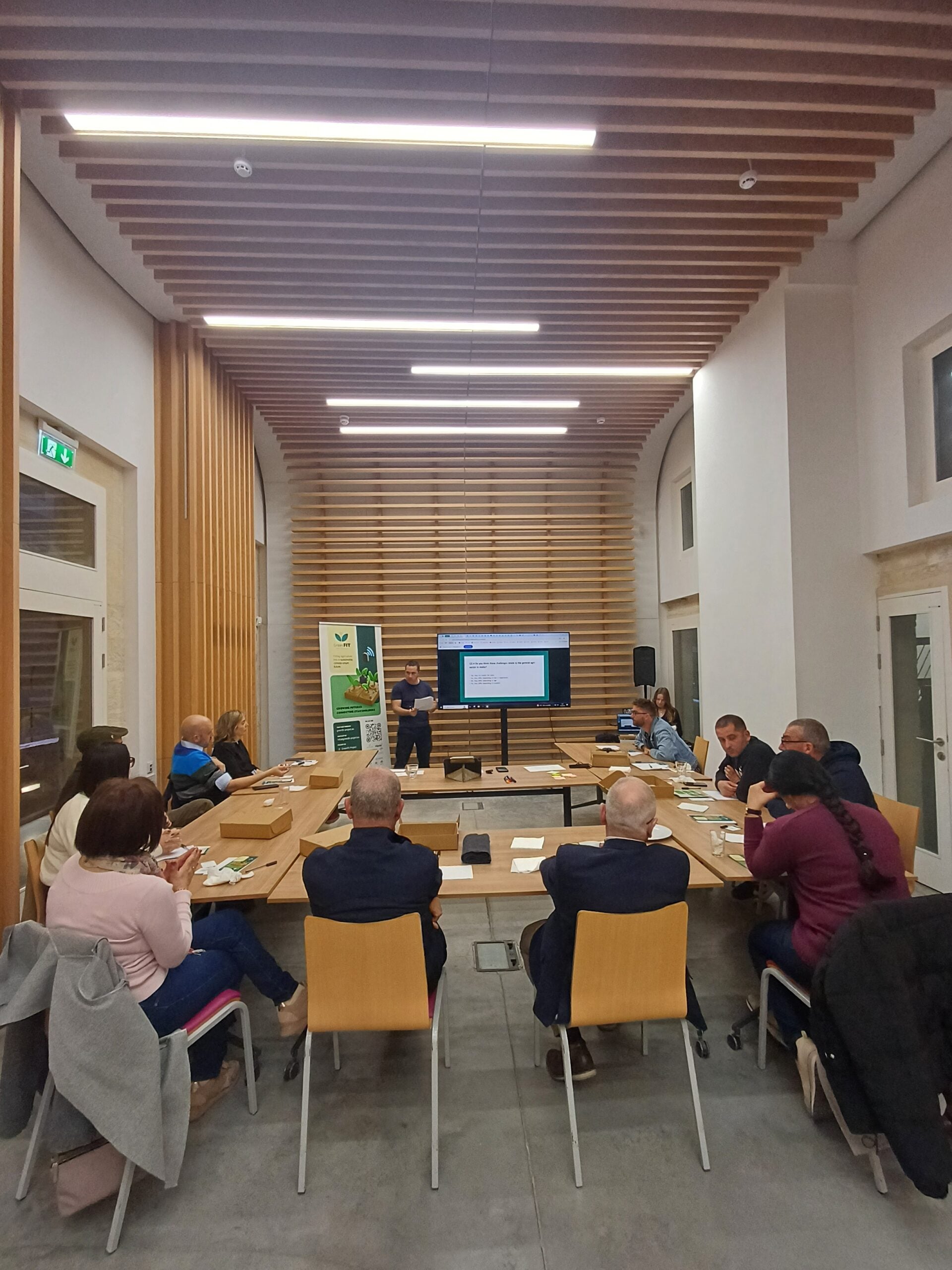
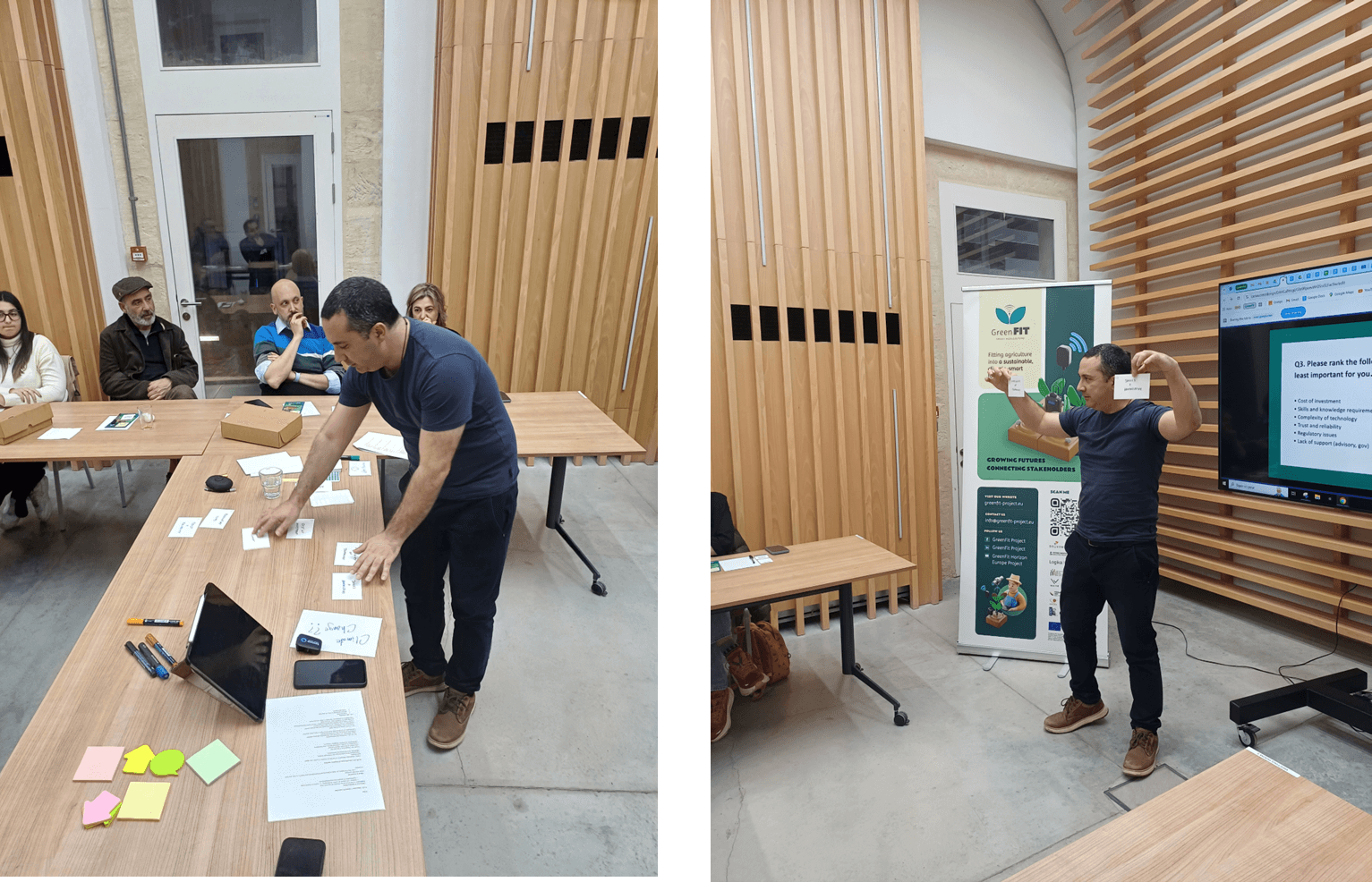
On 27 February 2026, our Maltese partners, Malta Youth in Agriculture (MaYA Foundation) and the Merill Rural Network (Merill), conducted a focus group bringing together 13 participants representing farmers, industry stakeholders, and members of the general public. The session gathered valuable insights on the socio-technical barriers and enabling conditions for adopting green and digital technologies in Malta’s agricultural sector.
Familiarity with Digital Technologies
Participants showed a general awareness of digital and green technologies, although hands-on experience remains limited. While some farmers are familiar with basic tools and concepts, more advanced solutions such as AI-driven systems or sensor-based platforms are less widely understood or used. Overall, familiarity does not yet translate into confident adoption, as many stakeholders lack the practical exposure and support needed to integrate these technologies into everyday farming practices.
Main Identified Barriers to Adoption
The discussion highlighted several interrelated barriers, strongly shaped by Malta’s small-scale and fragmented farming context. A key challenge is the complexity of technology. Many solutions are not well adapted to small, polycropped farms and are perceived as increasing workload rather than simplifying it. Systems requiring advanced digital skills or major changes to existing practices discourage uptake, particularly when local support is limited. Closely linked is the issue of skills and knowledge gaps. Farmers reported limited technical expertise and insufficient time to attend training or experiment with new tools. Without accessible, practical training and ongoing advisory support, the effort required to build competence becomes a major deterrent. However, the most critical barrier remains the cost of investment. High upfront costs, combined with uncertainty about performance and return on investment, significantly limit adoption. This is further compounded by limited access to technical support, increasing the perceived risk of failure.
Key Incentives for Adoption
Stakeholders highlighted several incentives that could significantly accelerate adoption. Financial support emerged as the strongest driver, with subsidies, grants, and cost-sharing mechanisms seen as essential to reduce upfront investment and financial risk, particularly given Malta’s small land holdings and tight profit margins. Equally important is ongoing technical support and training, as farmers emphasised the need for continuous advisory services, practical training, and post-purchase assistance rather than one-off sessions. On-farm demonstrations and peer examples were also identified as highly influential, since seeing technologies successfully applied in a local context helps build trust, reduce uncertainty, and encourages peer-to-peer learning. Overall, the most impactful incentives combine financial de-risking, practical support, and visible proof of success.
Conclusion
The session highlighted that adoption of green and digital technologies in Malta is primarily constrained by financial and technical barriers. High investment costs, limited local support, and uncertainty about returns remain the most critical challenges. Adoption is more likely when these risks are reduced through subsidies, continuous advisory support, and real-life demonstrations in local farming conditions. At the same time, solutions must be tailored to Malta’s unique agricultural context, characterised by small, fragmented, and diverse farming systems.
Simplicity, affordability, and compatibility with existing practices are essential. Technologies that clearly address farmers’ immediate needs such as water management, pest and disease monitoring, and early warning systems, are more likely to gain traction. Addressing these factors holistically will be key to accelerating the uptake of digital and green solutions in Malta’s agricultural sector.