
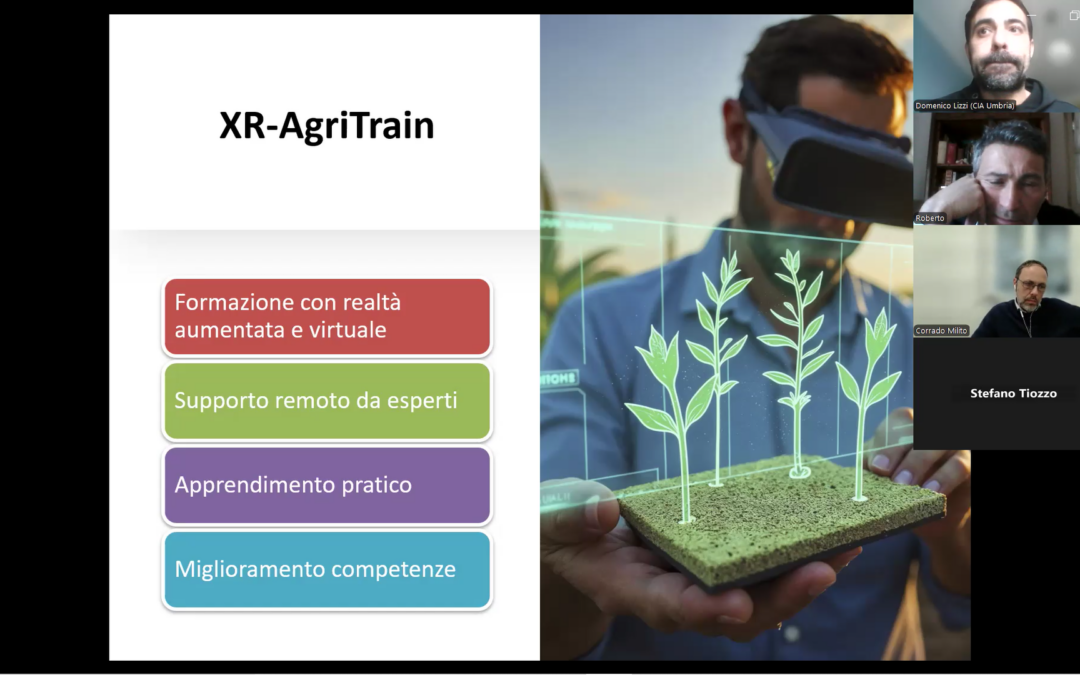
On 24 February 2026, our Italian partner, CIA Umbria organised an online focus group within the Central Italy (Umbria/Lazio), bringing together 13 participants representing farmers, agricultural entrepreneurs, agronomists, cooperatives, project managers, and experts in the Common Agricultural Policy (CAP) and multifunctional farming. The discussion explored the behavioural drivers, barriers, and enabling conditions influencing the adoption of green and digital technologies in agriculture.
Familiarity with Digital Technologies
Participants showed general awareness of technologies such as precision agriculture, drones, IoT systems, and digital farm management tools. However, practical use remains limited, particularly among older farm managers, with many stakeholders perceiving advanced technologies as complex and difficult to integrate into daily farming practices.
Main Identified Barriers to Adoption
The discussion highlighted economic risk as the most significant barrier. Farmers stressed that agricultural businesses often operate with narrow profit margins and high exposure to market and climatic uncertainty. Additionally, many farmers expressed reluctance to invest in solutions without clear and locally validated evidence of return on investment, fearing that unsuccessful investments could threaten business continuity, especially for small and medium-sized farms.
Participants also identified limited digital skills, insufficient practical training, and weak technical support as key obstacles. Specifically, farmers often struggle to assess technological offers critically, integrate digital tools into existing workflows, and maintain autonomy without becoming dependent on external technicians. Cultural resistance linked to the ageing farming population was another recurring theme, alongside concerns about regulatory complexity and limited access to independent advisory services and local innovation networks.
Key Incentives for Adoption
Participants agreed that adoption would increase with clearer evidence of economic benefits and more locally relevant demonstration projects. Farmers are more likely to adopt new technologies when they can observe measurable improvements in productivity, resource efficiency, and cost reduction. Practical and continuous training, including VR-based simulations, was considered essential for improving confidence and usability.
Peer-to-peer exchange and testimonials from farmers already using innovative technologies were also seen as powerful drivers of trust and behavioural change. Farmers tend to place greater trust in the experiences of fellow producers than in commercial providers or institutions. In addition, flexible financial instruments such as subsidies, leasing models, and shared ownership schemes were viewed as important tools to reduce investment risk. Several participants suggested that innovative technologies could help attract younger generations to farming by presenting agriculture as a more modern, professional, and technologically advanced field.
Conclusion
The focus group confirmed that the green and digital transition in agriculture depends not only on technology availability, but also on trust, training, financial sustainability, and local support systems. Participants highlighted the need for integrated strategies combining practical training, financial support, demonstration activities, and stronger advisory networks to encourage wider adoption across the region.